
Lens Coatings & Tints for Eyeglasses in Midvale

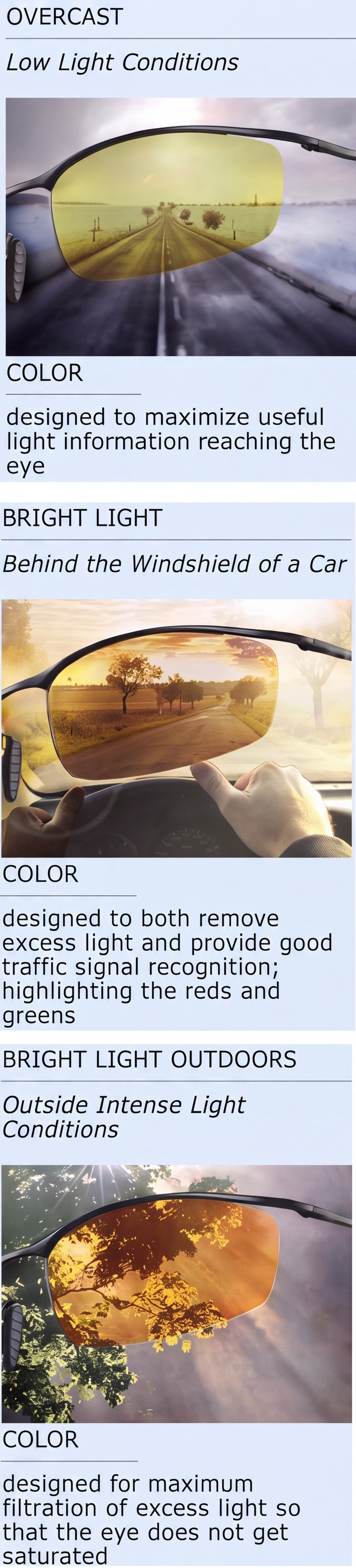
Infographic showing how a colour tint changes what you see in overcast low light, in bright light behind the windshield of a car, and in intense outdoor sunlight

Sunglasses Lenses

Solid tints

Solid tints give lenses a consistent color and darkness that do not automatically change with the light. Suitable plastic lenses can be dyed in a range of shades, depending on the lens material and coatings. A tint reduces the amount of visible light reaching your eyes, but its color or darkness does not tell you how much UV protection it provides. For sunglasses, choose lenses labeled UV400 or 100% UVA and UVB protection. Dark tints should not be worn for night driving.

Photochromic glass lenses

Photochromic glass lenses darken when exposed to ultraviolet (UV) light and gradually lighten when UV exposure decreases. Their darkness and transition speed depend on the lens design, temperature and light conditions. Traditional UV-activated lenses usually do not darken much behind a car windshield because it blocks much of the activating UV light. Glass is generally heavier and less impact-resistant than plastic alternatives, so it may not suit children or activities that require protective eyewear.

Photochromic plastic lenses

Photochromic plastic lenses offer a lighter-weight option that typically becomes clear or nearly clear indoors and darkens in sunlight. They can reduce the need to switch between everyday glasses and sunglasses, although separate sunglasses may still be useful for driving or very bright conditions. Most standard versions respond mainly to UV light and darken little behind a windshield; some designs also respond to visible light. Performance varies with the product and temperature. Check the specific lens for its UV protection and included coatings rather than assuming all versions are the same.

Polarized lenses

Polarized lenses use a filter to reduce reflected glare from surfaces such as water and roads. They can improve visual comfort for fishing, boating and daytime driving, but they do not eliminate every source of glare. Polarization itself does not provide UV protection, so choose lenses that also block 100% of UVA and UVB rays. Polarized lenses can make some dashboard and phone screens harder to read and may make icy patches less noticeable. A separate back-surface anti-reflective coating can help reduce reflections from behind you.

Drivewear lenses

Transitions Drivewear lenses combine polarization with photochromic technology that responds to both visible and UV light. Unlike standard UV-activated photochromic lenses, they can change tint behind a car windshield as well as outdoors. Their color shifts from olive to copper or dark brown as conditions change, while polarization reduces reflected glare. They provide 100% UVA and UVB protection. These are tinted sun lenses designed for daytime driving and outdoor use: they do not become clear indoors and should not be worn for night driving or driving after dusk.

Related Eyewear Services

Tints and coatings are one part of the eyewear we dispense. Explore the rest of what we offer:

Our Eye Care Services Eye Care Articles

Questions About Tints, Coatings or Polarized Lenses?

Tell us how you use your glasses — driving, screens, long days outdoors — and our opticians will match the right tint, photochromic lens or coating to your prescription and your day.

Book Appointment

Already a patient? Bring your current glasses to your next visit and we will show you how a tint or an anti-reflective coating would look on the lenses you wear now.